Runes: Types, Effects and Upgrading
Everything about colored and elemental runes: four tiers, combat effects, rune stone processing, upgrades, insertion and extraction.
Magic within the stone
Even the most reliable equipment can grow stronger when the magic of runes is awakened within it. Some runes restore health, others weaken enemies, and others help defend against a fatal blow or strengthen your attack. But no rune replaces a sound tactical choice: its power manifests only during specific combat events.
The game has two major families: colored and elemental runes. Each type has four tiers, its own effects, insertion rules and extraction conditions. Below is the entire journey from a raw rune stone to a finished rune in your favorite item.
Colored and elemental runes: the difference
Colored runes trigger on particular combat events: landing a direct hit, landing a ricochet hit, or receiving a direct hit yourself. Each colored rune has its own special ability: healing, weakening defense or attack, draining health or mana, preventing skill use and other effects.
Elemental runes are associated with Fire, Water, Air and Earth. They participate in elemental interactions, strengthening attack or defense. They trigger differently from colored runes: the conditions of the particular battle and elemental interactions matter. The maximum elemental trigger chance is 80%, but this is an upper limit, not a constant probability.
Colored and elemental runes can be combined if the equipment supports them and the restrictions are met.
What the four tiers mean
A tier I rune is the starting stage obtained by processing a raw stone. It can be upgraded to II, then III, and finally the highest tier, IV.
Upgrading does not transform one type into another: a Yellow Rune remains yellow, and a Fire Rune remains a fire rune. The main difference between tiers is the chance that the effect occurs. The current chances for colored runes are shown in the reference below. Exact elemental probabilities are not disclosed; they are subject to the overall 80% cap.
Several runes of one type, including different tiers, can be inserted if the overall limit for that type permits it. Their effects combine according to the rules of the corresponding color.
Complete rune reference
Below are all active types, both colored and elemental, with icons for each tier. Current effects, compatible equipment parts, quantity limits and published colored rune probabilities are also indicated. Data is loaded automatically from game settings, so value changes appear in the article without manual editing.
Select any icon to see it at a larger size.
Available rune varieties
Black Rune
On a ricochet hit, applies two independent effects for 3 turns: the owner recovers HP on their own turns, while the struck opponent loses HP on their own turns. Each effect per turn equals 2% of the struck opponent's maximum HP (at least 1 HP per rune). Repeated procs stack.
Available tiers: 1, 2, 3, 4.
Blue Rune
On a ricochet hit, the opponent loses 3 MP per turn and their elements are disabled for 1 turn per Blue Rune triggered.
Available tiers: 1, 2, 3, 4.
Brown Rune
On a direct hit, reduces the opponent's direct hit defense by 3 for 3 turns.
Available tiers: 1, 2, 3, 4.
Air Rune
Elemental rune. When triggered, dodges the physical hit.
Available tiers: 1, 2, 3, 4.
Earth Rune
Elemental rune. When triggered, the physical hit ignores the opponent's armor.
Available tiers: 1, 2, 3, 4.
Fire Rune
Elemental rune. When triggered, the physical hit deals 150% damage.
Available tiers: 1, 2, 3, 4.
Water Rune
Elemental rune. When triggered, reflects 50% of the physical damage actually received back to the attacker.
Available tiers: 1, 2, 3, 4.
Green Rune
Restores 3 HP to the owner upon receiving a direct hit.
Available tiers: 1, 2, 3, 4.
Orange Rune
On a ricochet hit, reduces the opponent's ricochet power by 3 for 3 turns.
Available tiers: 1, 2, 3, 4.
Plasma Rune
On a direct hit, the opponent loses 2 HP per turn for 3 turns.
Available tiers: 1, 2, 3, 4.
Red Rune
On a direct hit, locks the opponent's skills and scrolls starting on their next turn for 1 turn per Red Rune triggered.
Available tiers: 1, 2, 3, 4.
White Rune
On a direct hit, restores 2% of the owner's maximum HP (at least 1 HP per rune) over 3 turns.
Available tiers: 1, 2, 3, 4.
Yellow Rune
On a direct hit, reduces the opponent's direct hit power by 3 for 3 turns.
Available tiers: 1, 2, 3, 4.
When colored runes trigger
Trigger conditions fall into three main types.
On a direct hit: the strike must actually reach the enemy. Yellow, Brown, White, Red and Plasma Runes are examples of this type. If the strike misses or is blocked, merely pressing the turn button does not trigger such a rune.
On a ricochet hit: a successful ricochet hit is what matters. In ranged combat, a ricochet can reach the target even if the main strike misses. Black, Blue and Orange Runes work this way.
On receiving a direct hit: the rune responds to an ordinary strike that successfully reaches its owner. The Green Rune belongs to this type.
Thus, a hit, ricochet, block and miss are different events. Even if the main strike reaches the target, a rune that requires a ricochet does not necessarily trigger. Conversely, a ricochet hit is not a direct hit for runes in another group.
Combining tiers and identical runes
A tier determines a particular rune's contribution to the trigger probability of its color. If your character has several identical colored runes, the chance for that type is determined by their combined tiers, rather than by adding independent guaranteed attempts.
When the effect triggers successfully, the number of runes may influence its strength or duration. For example, the combined weakening effect may be stronger, and certain restrictions may last longer. The exact rule for each color depends on the rune's description.
A high tier does not guarantee an effect in every round. The absence of an effect also does not mean that the main physical strike missed.
Elemental runes in combat
Fire strengthens physical attack: on the appropriate trigger, an ordinary strike may become significantly more powerful.
Earth helps penetrate an enemy's defenses, allowing ordinary armor to be ignored when the appropriate trigger occurs.
Air is a defensive element capable of avoiding a physical strike entirely.
Water is a defensive element capable of returning part of the impact of a received physical strike to the attacker.
Elemental manifestations depend on what happened and which other effects are active at that moment. Elemental runes do not promise constant protection or a permanent attack bonus.
The elemental chance does not exceed 80%. The actual conditions and probabilities are not disclosed.
Raw Rune Stone
Before obtaining a rune, you need a suitable magical material: a Raw Rune Stone.
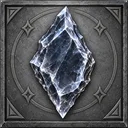
A raw stone has no combat effect of its own and cannot be inserted into armor or a weapon. It must first be engraved.
There are two main ways to obtain stones:
Castles. Stones may be included among rewards for designated victories and castle completions. Rewards depend on the conditions of the particular castle.
City Shops. Raw stones are sold in ordinary game Shops for silver. Exact prices and availability are shown in the Shop.
Collected stones are stored in the inventory and used to create runes of any available family.
Creating a rune in the Mages' Tower
Engraving takes place in Arcanor's Mages' Tower, in the Rune Engraving section.
The procedure is simple: bring a raw stone, open engraving, choose a colored or elemental type and confirm the attempt.
Each attempt requires one stone and silver. On success, you receive the selected tier I rune. On failure, the stone and silver are still consumed, and no finished rune appears.
The success chance and attempt cost are equally important: before creating several runes at once, check your stone count and silver reserves.
Upgrading runes at the Rune Table
Finished runes are upgraded at the Rune Table in the same Mages' Tower.
Here you can upgrade a rune from tier I to II, II to III, and III to IV. Different colors, elements or tiers cannot be mixed in one attempt: you need identical runes of the same tier.
Each attempt consumes the prescribed number of source runes. They disappear regardless of the outcome. On success, you receive one rune of the next tier. On failure, no upgraded rune is created.
After each failure, the chance of the next upgrade attempt for that family and tier gradually increases. It cannot exceed 100%. After success, the accumulated bonus resets. Transitions I → II, II → III and III → IV are tracked separately, as are the different rune types.
Plan high-tier rune creation especially carefully: each new attempt requires additional source runes.
Current prices and probabilities
Below are the current values for engraving, upgrading and opening additional sockets. These are loaded automatically from game settings and update along with them.
Current rune rules
Creating a tier I rune. 1000 silver per attempt, 90% chance of success.
Upgrading a rune. Each attempt uses 3 identical runes of the current tier.
Additional socket. Opening a socket costs 500 gold.
Inserting runes into equipment
Insertion takes place at the Rune Table. Select an item, then an available rune socket and a compatible rune from your inventory.
Three things are checked during insertion:
Suitable equipment type. Some runes fit weapons, while others fit amulets, rings, bracelets, armor and other permitted items. The current compatibility of each type is indicated in the reference above.
An available rune socket. You cannot insert more runes into an item than it has available sockets.
The limit on identical runes. A character has a maximum number of runes of each type. This restriction applies to the total number of eligible inserted runes, not just those in one item.
After insertion, the rune becomes part of the chosen item. It cannot be moved as a separate ordinary rune until it has been extracted.
Additional sockets and the Socket Punch
Some items can gain an additional rune socket using the Socket Punch at the Rune Table.
Using it costs gold and is possible only within the item's maximum socket count. The Socket Punch can be used only once per item. If all permitted sockets are already open, further enhancement is unavailable.
Amulets have special rules for their initial and maximum socket counts. Temporary items and mounts cannot be processed in this way.
Extraction: the main difference between the two families
Before replacing or extracting a rune, remember the following.
An ordinary colored rune is destroyed on extraction. It does not return to your inventory. If you insert another rune in its place, the previously inserted ordinary rune also disappears permanently. This applies even to a rare high-tier rune.
An elemental rune is preserved on extraction. When removed or replaced, the elemental rune returns to your inventory and can be reused.
This is one of the most important differences between the families. Plan colored rune replacements in advance and do not destroy a rare rune by accident.
Built-in AUTO runes
Some items contain non-removable built-in AUTO runes. They do not occupy ordinary rune sockets and adapt to inserted runes of the same type in the character's equipment.
If there are no inserted runes of that type, AUTO acts as a tier I rune. If one tier IV rune is inserted, all built-in AUTO runes of that type receive its trigger chance. When runes of different tiers are inserted, AUTO uses the average chance of the inserted runes of that type. Adding a weaker rune may therefore reduce the overall chance, although the effect's strength increases because there are more runes.
Built-in AUTO runes cannot be extracted or replaced, but their current effectiveness changes automatically with equipment.
Frequently asked questions
Can different runes be combined? No. Upgrading requires identical runes of the same type and tier.
Why is a rune unavailable for the selected item? The reason may be an unsuitable equipment type, no open socket, or the limit on identical runes being reached.
Will an ordinary rune become stronger if several identical ones are inserted? Within the limits, the number of identical runes may increase the combined effect or duration. The chance itself is determined by separate rules for their tiers.
Why did an element not trigger? Even a powerful element does not guarantee a result. The maximum permitted chance is 80%, and the actual trigger conditions depend on the battle.
Tips before battle
• Decide on your tactics before choosing runes.
• Do not confuse a direct hit with a ricochet: they activate different colored runes.
• Check insertion restrictions before collecting a high-tier rune set.
• Do not replace a colored rune unless you are sure you are willing to lose it.
• Use the detailed battle chronicle to understand which effects triggered and when.
Runes do not fight instead of the hero. They reveal the strength of those who know when and how to use them.